 ultimate-guide
Residential EV Charger Installation Requirements: 2026 Guide
Table of Contents
- Your Home's Electrical Capacity: The First Requirement
- NEC Requirements for Residential EV Charger Installation
- Electrical Panel Upgrade for EV Charger: When It's Necessary
- North Charleston Electrical Permit Requirements
- Level 2 EV Charger Installation Cost: What Affects Your Quote
- Safety Checklist for Your Residential EV Charger Installation
- Frequently Asked Questions
Last Updated: October 4, 2026
Your Home's Electrical Capacity: The First Requirement
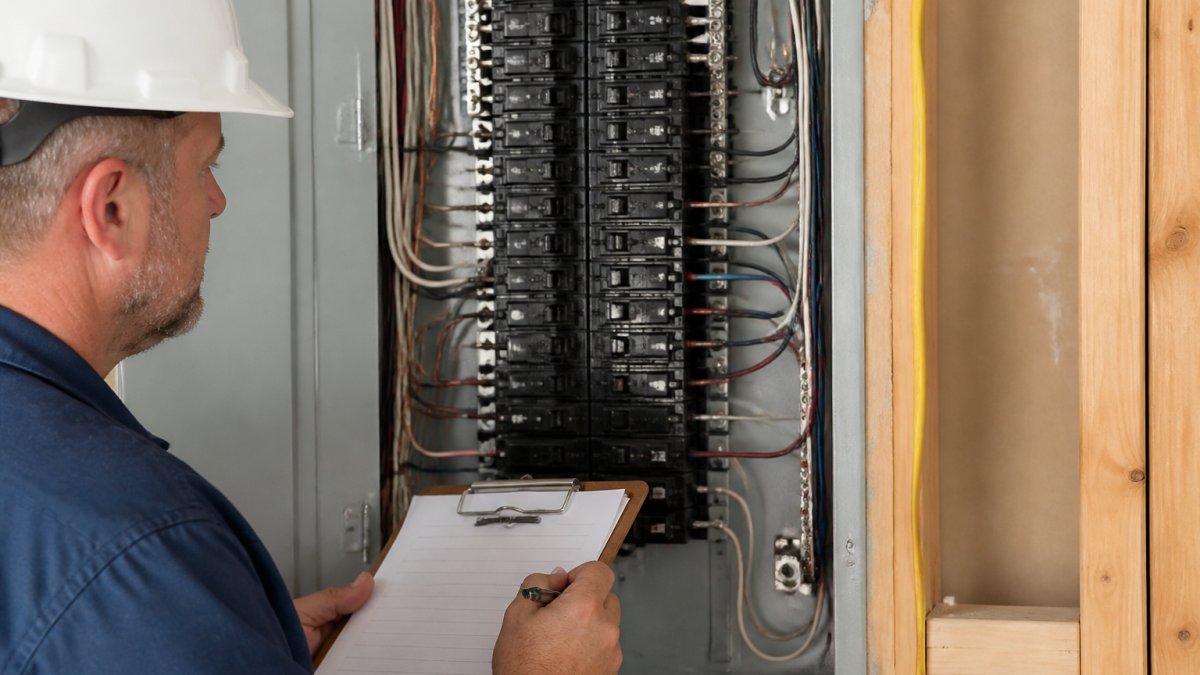
Residential EV charger installation requirements start with one question: can your electrical panel carry the extra load? A Level 2 charger draws far more current than a typical 120-volt outlet, and most older homes in North Charleston were never sized for it.
Load calculation is the process of adding up every appliance, circuit, and fixed load in a home to determine whether the existing service can support a new dedicated circuit. The National Electrical Code (NEC) permits this calculation under Article 220, and it is what separates a compliant install from one that trips the main breaker on a cold morning.
How to Read Your Panel's Load Calculation
The math follows a general method: add general lighting and receptacle loads at 3 volt-amperes per square foot, add major appliances, apply demand factors, then compare the total against the panel's rating. A 100-amp panel serving an all-electric home with a heat pump, range, and dryer usually has little room left. A 200-amp panel typically does.
What most guides miss is that the nameplate rating on the panel is not the same as available capacity. An electrician performs the calculation; a homeowner guessing from the breaker count will guess wrong.
NEC Requirements for Residential EV Charger Installation
The NEC treats EV charging as a continuous load, which changes the sizing rules. EV supply equipment must be supplied by a dedicated branch circuit, and that circuit must be sized at 125 percent of the charger's maximum continuous current. A charger rated at 40 amps therefore needs a 50-amp circuit.
Dedicated Circuit and GFCI Protection Rules
Several requirements apply to every residential install:
- Dedicated circuit: The EV charger cannot share a circuit with any other load.
- GFCI protection: Where the NEC requires ground-fault protection for the receptacle or circuit, it must be listed for the purpose and installed per the manufacturer's instructions.
- Disconnecting means: A means to disconnect the equipment must be accessible and clearly labeled.
- Working clearances: The panel and charger need unobstructed access per NEC clearance tables.
Code editions are adopted at the state and local level, so the version enforced in your area may differ from the newest published edition. Always confirm with the authority having jurisdiction before ordering equipment.
According to the National Fire Protection Association's overview of NFPA 70, the NEC is updated on a three-year cycle, and jurisdictions adopt it on their own timelines.
Electrical Panel Upgrade for EV Charger: When It's Necessary
An electrical panel upgrade for an EV charger is necessary when the load calculation shows the existing service cannot support the new dedicated circuit without exceeding capacity. In practice, that usually means a 100-amp panel in a home with gas appliances, or any panel already near its limit.
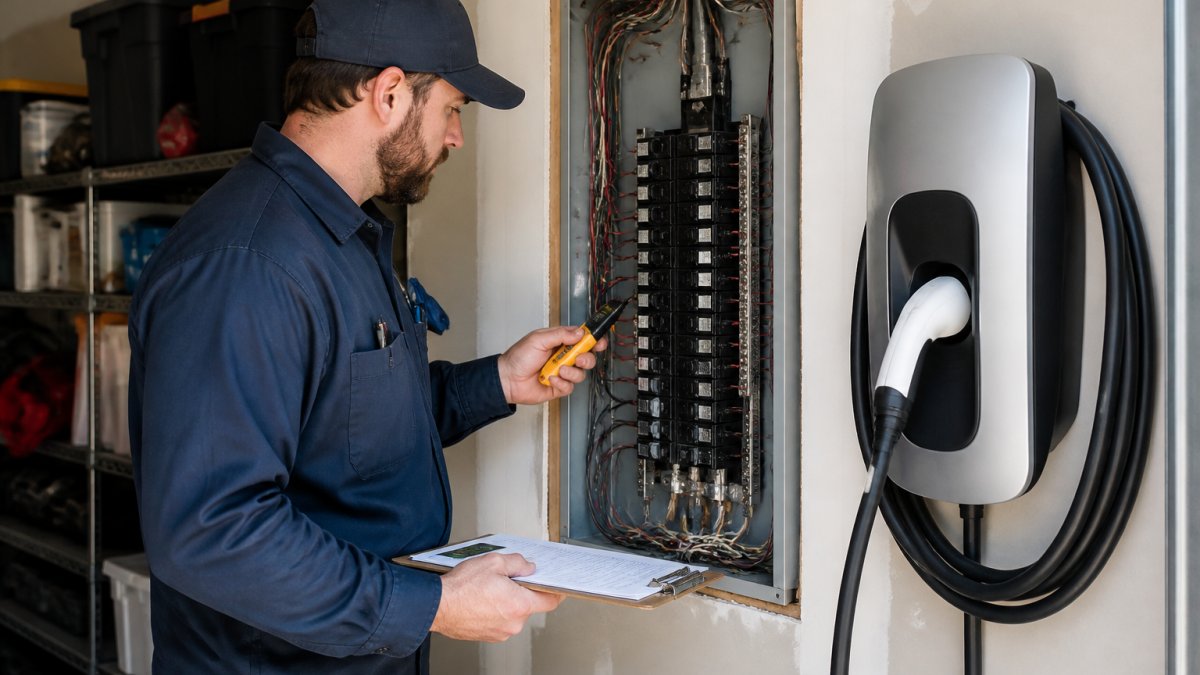
The upgrade itself means replacing the service panel with a higher-rated unit and, in many cases, coordinating with the utility on the service drop. That coordination is where timelines slip. We handle that step for Lowcountry homeowners.
North Charleston Electrical Permit Requirements
North Charleston electrical permit requirements apply to EV charger installations, and the work must be inspected before it is energized. Permits are issued through the city's building department, and the process generally involves an application, a plan or description of the work, the inspection itself, and final approval.
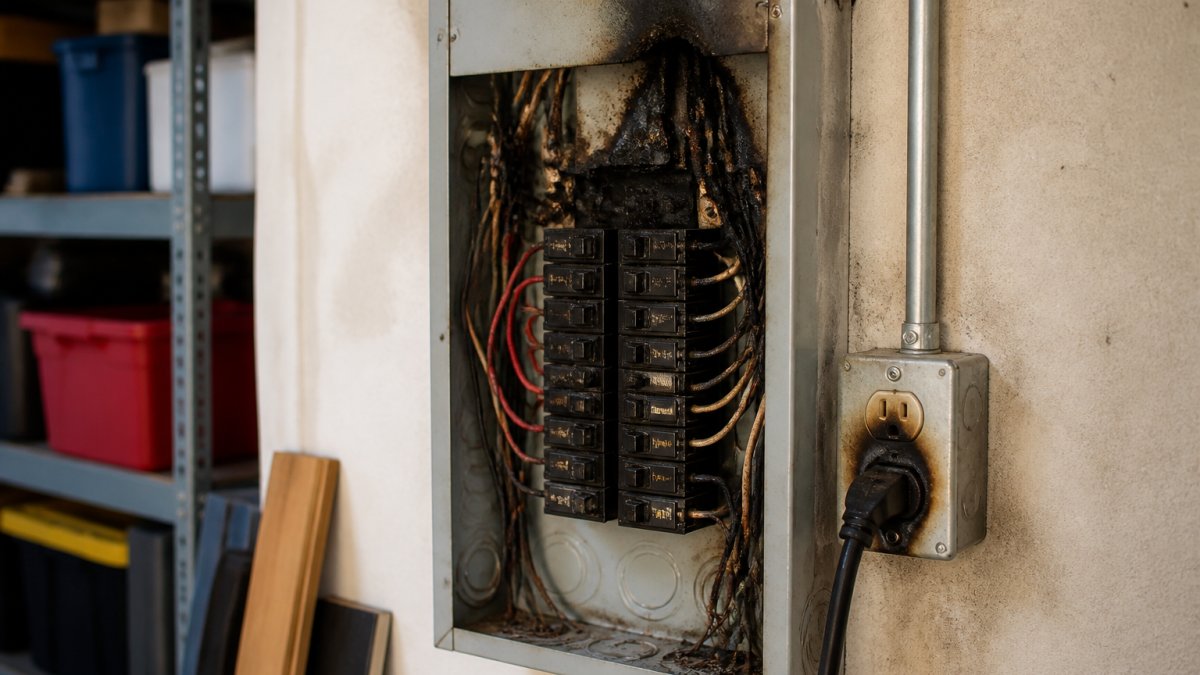
The sequence matters. Pull the permit before the work starts, not after. An unpermitted install creates real problems at resale, and it can void insurance coverage if a fire is traced to the circuit. For homeowners searching for a "near me" electrician, the willingness to pull a permit is one of the fastest ways to tell a professional from a handyman.
We pull permits as a standard part of every job.
Level 2 EV Charger Installation Cost: What Affects Your Quote
Level 2 EV charger installation cost depends on the work behind the wall, not the charger on it. Two homes on the same street can get quotes that differ substantially because of circuit length, panel capacity, and whether drywall has to be opened. Because pricing varies by site conditions, we quote after a walkthrough.
| Cost Factor | What Drives It | Typical Impact |
|---|---|---|
| Circuit run length | Distance from panel to charger location | Longer runs need more conductor and conduit |
| Panel capacity | Whether a service upgrade is required | Usually the largest single variable |
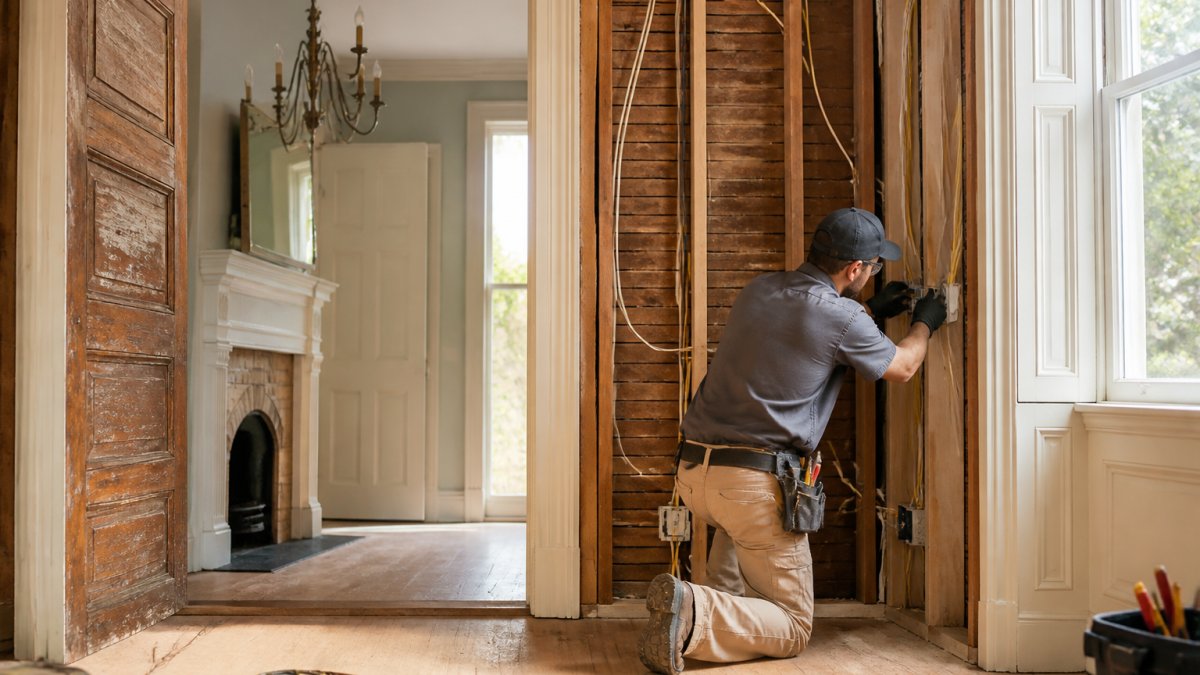
| Wall and finish work | Finished garage, historic plaster, exterior runs | Adds labor and patching |
| Permit and inspection | Local jurisdiction fees and scheduling | Fixed cost per project |
| Charger amperage | 32A, 40A, or 48A equipment | Higher amperage may force circuit changes |
For current pricing on your specific property, request a quote from EmergenServe and we will walk the site before we put a number on paper.
Safety Checklist for Your Residential EV Charger Installation
Run through this before you sign anything:
- Load calculation completed and documented
- Circuit sized at 125 percent of charger continuous current
- Dedicated circuit confirmed, no shared loads
- GFCI protection installed where required by the adopted code edition
- Permit pulled and inspection scheduled
- Disconnect means accessible and labeled
- Working clearance maintained around panel and charger
- Installer licensed, bonded, and insured
- Manufacturer's instructions followed for the specific charger model
The last item on that list is the one people skip. The NEC requires equipment to be installed per its listing and labeling, and that includes the torque values and conductor types in the manual.
Frequently Asked Questions
Do I need a permit to install an EV charger in North Charleston?
Yes. The City of North Charleston requires an electrical permit for any new 240-volt circuit, including a Level 2 EV charger. You'll need to submit an application, and the work must pass an inspection by a licensed electrician. Skipping the permit can lead to fines, insurance issues, and problems when you sell your home. Always confirm current requirements with the North Charleston Building Department before scheduling installation.
What are the NEC requirements for residential EV charger installations?
The National Electrical Code (NEC) sets key rules for EV charger installation. Article 625 requires a dedicated branch circuit, ground-fault circuit-interrupter (GFCI) protection for certain chargers, and proper conductor sizing for continuous loads (the charger draws current for hours). You also need a disconnecting means within sight of the charger unless the unit is lockable. A licensed electrician will ensure your installation meets the NEC edition adopted in South Carolina.
Can I install a Level 2 EV charger myself in South Carolina?
South Carolina does not require a state electrical license for homeowners working on their own property, but local rules in North Charleston still require a permit and inspection. More importantly, a Level 2 charger involves 240 volts, high continuous current, and complex code requirements. Mistakes can cause fires or void your insurance. Hiring a licensed electrician is strongly recommended for safety and code compliance.
Does my electrical panel need an upgrade for an EV charger?
Not always. Many modern 200-amp panels have enough spare capacity for a 40- or 50-amp EV circuit. An electrician will perform a load calculation based on your home's square footage and appliances. If your panel is older, already heavily loaded, or rated at 100 amps, an electrical panel upgrade for EV charger installation may be necessary. EmergenServe can assess your panel and recommend the right solution.
How much does it cost to install an EV charger in Charleston, SC?
Level 2 EV charger installation cost varies based on circuit length, panel capacity, permit fees, and whether an upgrade is needed. A straightforward install in an attached garage costs less than a detached garage run or a service upgrade. Contact us to schedule a site assessment and get a detailed estimate.
What is the difference between a Level 1 and Level 2 EV charger installation?
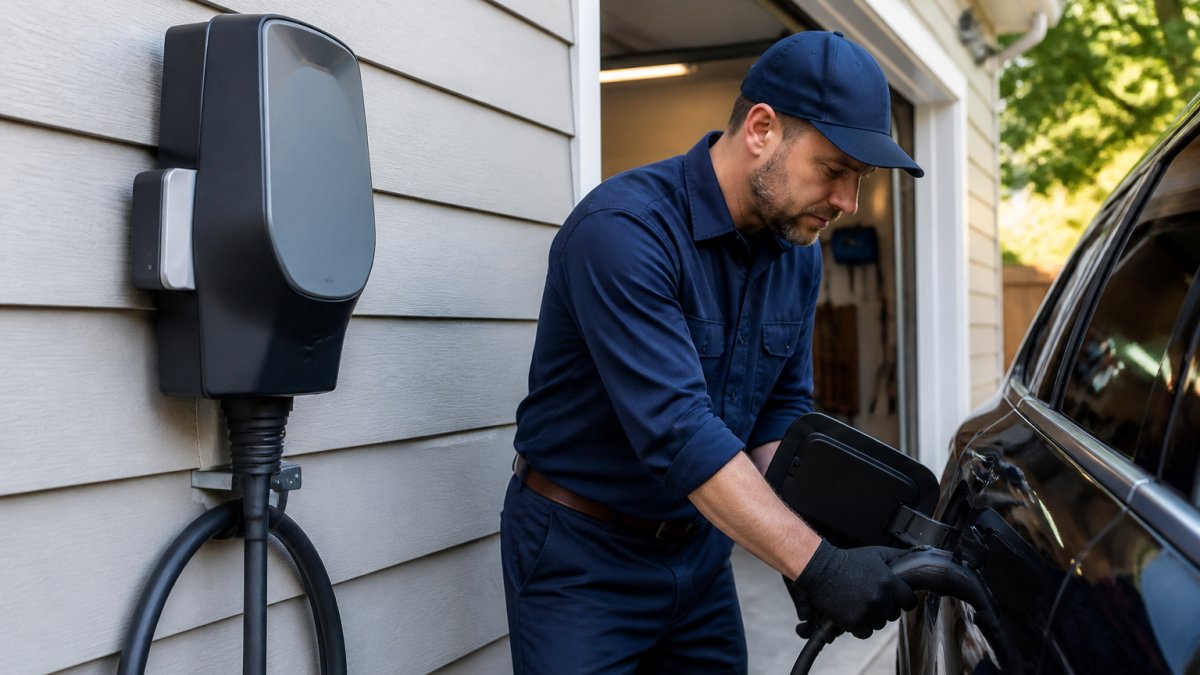
Level 1 chargers plug into a standard 120-volt outlet and add about 3-5 miles of range per hour. They require no special installation but are slow. Level 2 chargers use a 240-volt dedicated circuit and add 20-30 miles of range per hour, making them the practical choice for daily driving. Level 2 installation requires an electrician, a permit, and possibly a panel upgrade, while Level 1 simply uses an existing outlet.
EV charging is one of those upgrades that looks simple until the panel says no. If your North Charleston home needs a load calculation, a service upgrade, or a code-compliant Level 2 install, EmergenServe can handle it. We are licensed, bonded, and insured, we offer same-day booking, and our team is available 24/7 with a 60-minute emergency response when something goes wrong. Get started with EmergenServe and charge at home with confidence.