 how-to
How to Identify Outdated Electrical Panels: 2026 Guide
Table of Contents
- Warning Signs Your Electrical Panel Is Outdated
- Obsolete Electrical Panel Brands to Watch For
- Is a Federal Pacific Panel Safe? What Homeowners Need to Know
- How to Check the Age and Capacity of Your Panel
- Your Electrical Panel Inspection Checklist
- Electrical Panel Replacement Cost and When to Call a Professional
- Frequently Asked Questions
Last Updated: September 13, 2026
Warning Signs Your Electrical Panel Is Outdated
Knowing how to identify outdated electrical panels starts with your senses. An electrical service panel that flickers, buzzes, or smells like burning is telling you something is wrong before a breaker ever trips.
At EmergenServe, we walk into Lowcountry garages and utility closets every week and spot the same red flags. The clues are rarely subtle once you know what you're looking at.
Three symptoms deserve immediate attention:
- Flickering lights that dim when the refrigerator kicks on, a sign the panel can't distribute electrical load evenly
- Buzzing sounds from the panel itself, which often point to a loose main breaker or failing internal connections
- A burning odor near the panel, the clearest warning of overheating and a genuine fire risk
Any one of these means you should stop resetting breakers and call a licensed electrician.
Flickering Lights, Buzzing Sounds, and Burning Odors
Flickering that happens only in one room usually points to a fixture or a loose outlet. Flickering across the whole house is a panel problem.
When lights dim every time a large appliance starts, the panel is struggling under an electrical load it was never sized to carry. Buzzing is different: a faint hum is normal, but a loud, raspy buzz from inside the panel suggests arcing at the main breaker or a failing bus bar.
A burning odor is never normal. It means insulation or connections are overheating, and it's the symptom most closely tied to fire risk.
Physical Damage: Rust, Corrosion, and Scorch Marks
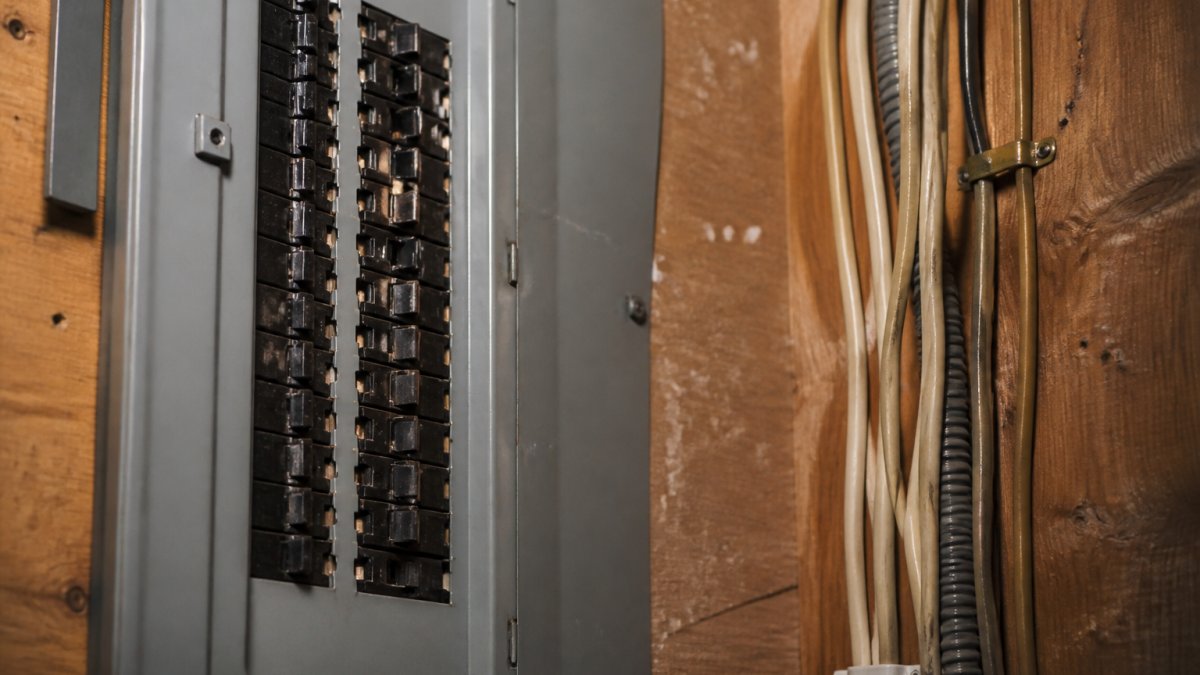
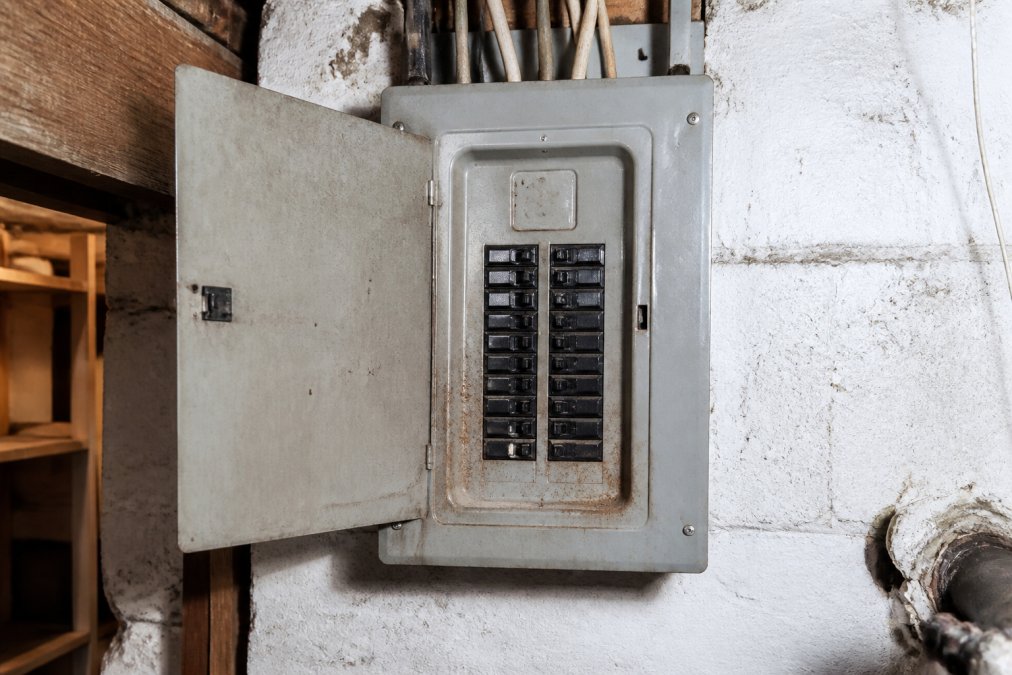
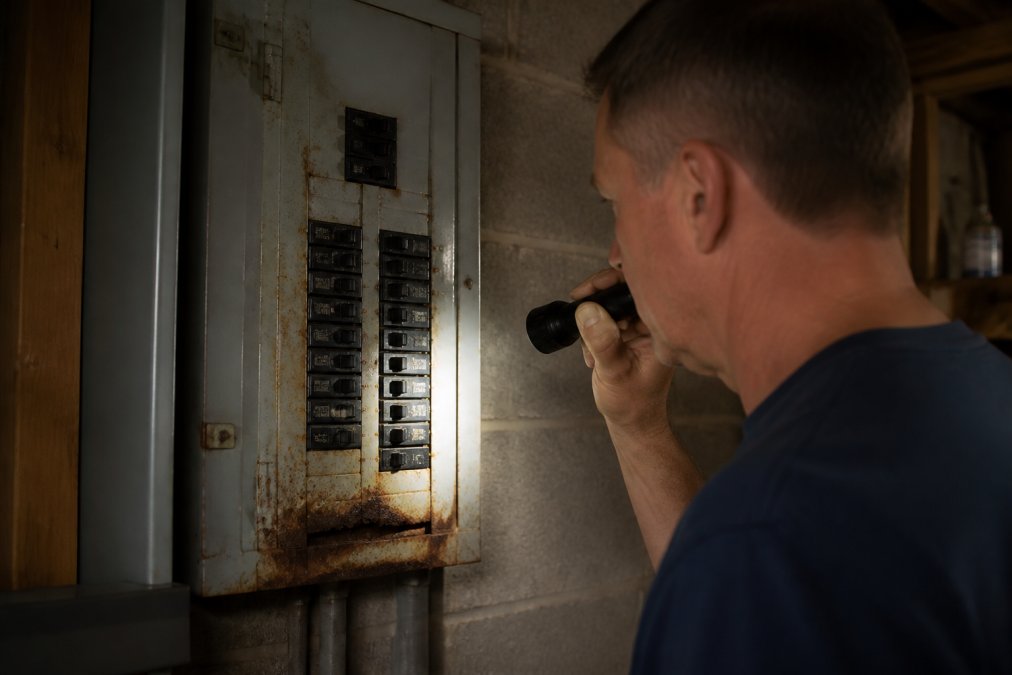
Open the panel door and look at the metal and the breakers. Rust and corrosion usually mean moisture has been getting in, common in humid coastal climates and older homes with poorly sealed service entries.
Scorch marks, melted plastic around a breaker, or discolored wiring are signs of thermal damage that has already occurred. If you see any of these, don't touch the breakers. Call a professional.
Obsolete Electrical Panel Brands to Watch For
Certain brand names are worth memorizing because they're associated with known safety hazards. If you see one of these on your panel cover, treat it as a prompt for a professional inspection.
- Federal Pacific Electric (FPE) panels, often sold under the Stab-Lok name
- Zinsco panels, recognizable by their distinctive colored breakers
- Wadsworth panels, common in mid-century homes
- Older fuse box installations still running ceramic fuses instead of modern circuit breakers
These aren't just old. They represent obsolete technology with documented failure patterns, which is why electricians flag them on sight.
Is a Federal Pacific Panel Safe? What Homeowners Need to Know
A Federal Pacific panel is not considered safe by modern standards. These panels have a well-documented history of breakers that fail to trip when they should, leaving circuits energized during an overload.
That failure mode is the whole problem. A breaker's job is to cut power before wiring overheats. When it doesn't trip, the wiring becomes the fuse, and that's how house fires start.
If your home has a Federal Pacific or Stab-Lok panel, the responsible move is a professional evaluation, not a wait-and-see approach. Many insurers now ask about panel brand during underwriting, and some won't cover a home with a known-hazard panel until it's replaced.
How to Check the Age and Capacity of Your Panel
You can usually date a panel and read its capacity without removing the dead front. Start with the label inside the door, then work outward to the main breaker, the breaker layout, and the service entrance.
Here's the sequence a licensed electrician follows:
- Open the panel door only (not the cover). The manufacturer label is typically affixed to the inside of the door or the back wall of the enclosure.
- Read the label for three things: the manufacturer, the maximum amperage rating (often printed as "200A MAX" or "125 AMP" near the top), and the model or catalog number.
- Look for a date code. Most manufacturers stamp a two- or four-digit code on the label or on the side of the enclosure. Common formats include a two-digit year ("78" = 1978), a four-digit year-month ("8406" = June 1984), or a Julian-style code where the first two digits are the year and the last three are the day of the year.
- Cross-check against the home. If the panel date and the home's build year are within a year or two of each other, the panel is almost certainly original. A panel newer than the home usually means a prior upgrade, ask for documentation.
- Read the main breaker handle. The amperage is stamped on the switch itself. A "100" or "100A" means a 100-amp service; "200" means 200-amp.
- Count the breaker spaces. A 200-amp panel typically has 40 spaces; a 100-amp panel usually has 20 to 24. If every space is filled and you still need circuits, you're at capacity regardless of the amperage rating.
Reading the Label and Main Breaker Amperage
Amperage capacity is the maximum electrical load the panel is rated to carry continuously. A 100-amp service was standard from the 1950s through the 1970s (energy.gov). A 200-amp service is the modern baseline for new construction and for homes adding EV chargers, heat pumps, electric ranges, or tankless water heaters.
A quick rule of thumb: a 100-amp panel can typically support a home with gas heating, gas cooking, and no EV charging. Once you add a 48-amp EV charger (which draws 40 amps continuous under the 80% rule), a heat pump, or an electric range, a 100-amp service is usually at or over its practical limit (energy.gov).
How a Load Calculation Actually Works
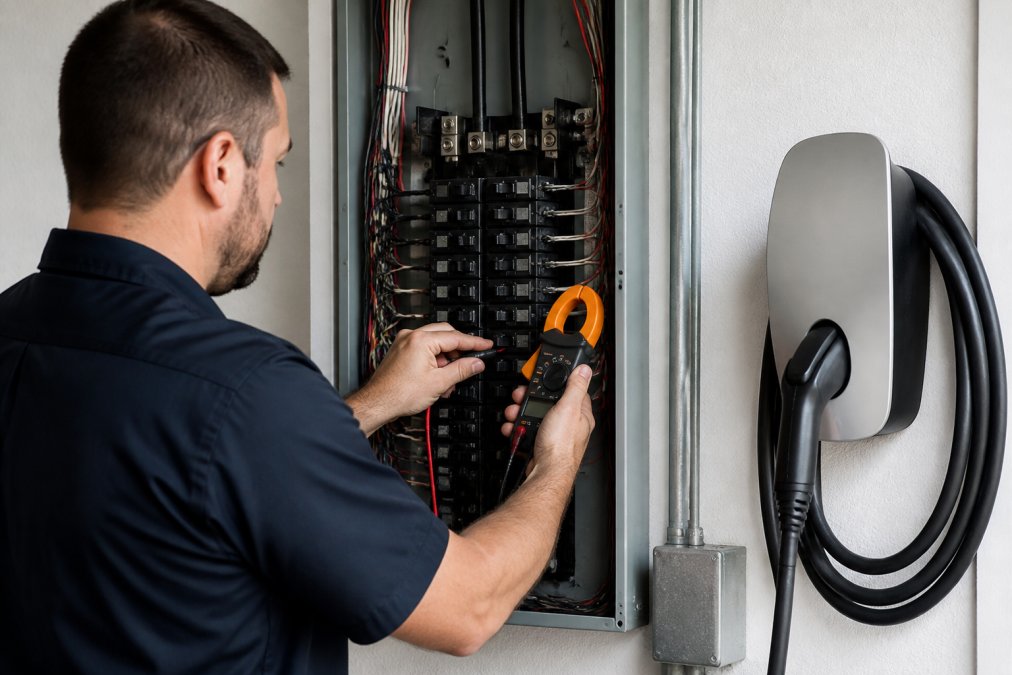
A licensed electrician doesn't guess whether your panel can handle a new load, they run a load calculation following the method in Article 220 of the National Electrical Code (NFPA 70) (nfpa.org). The calculation totals:
- General lighting and receptacle load (typically 3 volt-amperes per square foot of living space)
- Small-appliance and laundry branch circuits
- Fixed appliances (water heater, disposal, dishwasher, range, dryer)
- The largest motor load
- EV charging load (treated as a continuous load)
The result is compared against the service rating. If the calculated load exceeds 80% of the panel's rating, the panel needs an upgrade or a load-management device. This is the number that matters, not the amperage printed on the breaker alone.
Your Electrical Panel Inspection Checklist
An electrical panel inspection checklist helps you document what you see and hand useful information to an electrician. Work through it from a safe distance, with the panel cover closed.
- Listen for buzzing, crackling, or popping from the panel
- Check for a burning odor near the panel or in the room
- Look for rust, corrosion, or water stains on the panel and surrounding wall
- Note any scorch marks, melted plastic, or discolored breakers
- Confirm the main breaker amperage (100A vs 200A)
- Identify the panel brand and look for FPE, Zinsco, or Wadsworth
- Check whether breakers trip repeatedly or won't reset
- Look for double-tapped breakers or missing filler plates
- Note whether the panel has open slots for future circuits
If any box stays unchecked because you're unsure, that's your signal to bring in a professional.
Electrical Panel Replacement Cost and When to Call a Professional
Electrical panel replacement cost depends on the amperage, the condition of the service conductors, whether the meter base or service mast needs work, the panel's location, and local permit and inspection fees. There is no honest single number, but there is a realistic range, and knowing it helps you evaluate quotes instead of guessing.
The cost of a straightforward 200-amp panel replacement depends on various factors. Costs climb above that when the job involves:
- Service upgrade from 100A to 200A, new meter base, new service conductors, and utility coordination
- Underground versus overhead service, underground pulls often cost more in labor
- Panel location, a finished basement, tight closet, or exterior wall with stucco adds access time
- Old or aluminum branch wiring, may require pigtailing or partial rewiring
- Permits and inspection, required in most jurisdictions and typically $100 to $400
- AFCI/GFCI breaker requirements, modern code requires these on many circuits, adding breaker cost
For an accurate understanding of costs, it's advisable to obtain detailed quotes that itemize the panel, breakers, labor, permit, and any service-conductor work.
The Insurance Angle Most Homeowners Miss
This is the part of the conversation that rarely makes it into a search result. Many homeowners insurance carriers now ask about panel brand and age during underwriting or at renewal. A panel on a known-hazard list, Federal Pacific Stab-Lok and Zinsco are the two most commonly cited, can trigger one of three outcomes:
- Coverage declined until the panel is replaced
- Higher premium to reflect the added fire risk
- A policy exclusion for losses traced to the panel
Even panels that aren't on a hazard list can draw scrutiny if they're 40+ years old or rated at 100 amps. If you're buying or selling a home, a panel that an insurer won't cover becomes a negotiating item. Replacing the panel before listing avoids a last-minute scramble.
The Long-Term ROI of Upgrading
A modern 200-amp panel isn't just a safety fix, it's capacity you'll use. The upgrade typically pays back through:
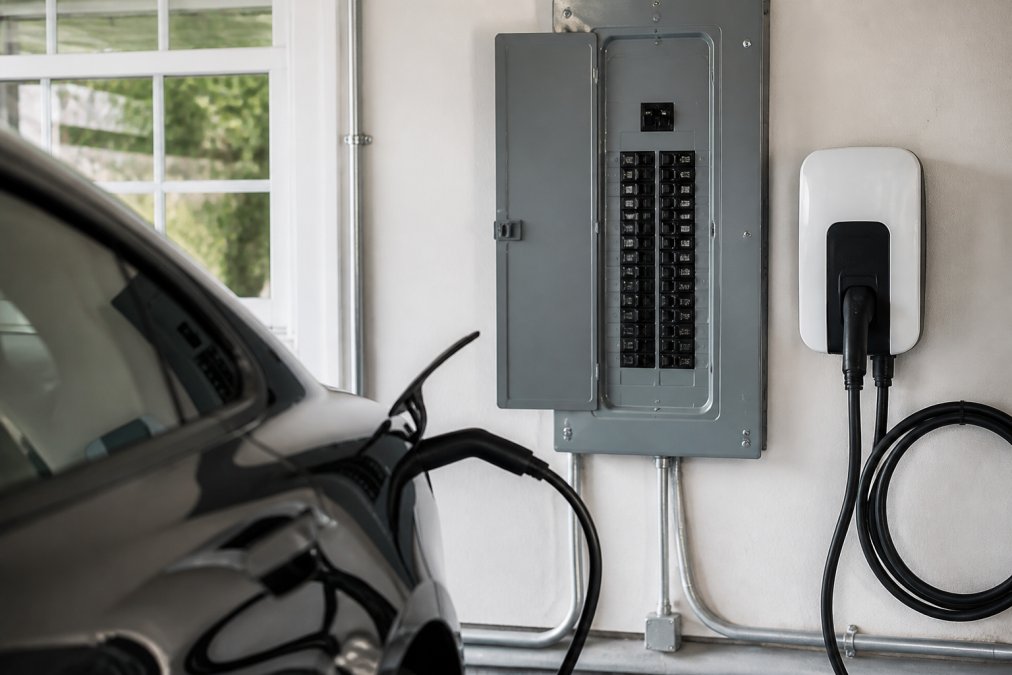
- EV charger readiness, a Level 2 charger needs the headroom a 100-amp panel usually can't provide
- Heat pump and electrification rebates, many utility and federal programs require adequate service capacity
- Home sale value, a documented panel upgrade removes a common buyer objection
- Insurance stability, avoiding a non-renewal or a hazard-panel exclusion
- Fewer nuisance trips, modern AFCI/GFCI breakers and properly sized circuits reduce the recurring annoyance of a panel at its limit
The upgrade rarely pays for itself in energy savings alone. It pays back in avoided problems: an insurer who won't renew, a buyer who walks, or a circuit that can't support the equipment you want to install.
When to Call a Professional Immediately
Call a licensed electrician the same day if you see any of these:
- Scorch marks, melted plastic, or discolored breakers
- A burning odor near the panel
- Loud buzzing, crackling, or popping from inside the panel
- A Federal Pacific, Stab-Lok, or Zinsco label
- Breakers that trip repeatedly or will not reset
- Rust, corrosion, or water stains inside the enclosure
These are not wait-and-see situations. For less urgent concerns, planning an EV charger, adding a sub-panel, or preparing a home for sale, schedule a load calculation and inspection so you know what your service can handle before you commit to new equipment.
Frequently Asked Questions
How do I know if my electrical panel is outdated?
Key signs include a fuse box with ceramic fuses or a panel with fewer than 100 amps, rust or corrosion inside the cabinet, scorch marks, a burning odor, breakers that trip often, and flickering lights. Panels made by Federal Pacific, Zinsco, or Wadsworth are also considered outdated and potentially unsafe. If you notice any of these, schedule a professional inspection to confirm whether an upgrade is needed.
What electrical panels are obsolete or uninsurable?
Federal Pacific Electric (Stab-Lok), Zinsco, and Wadsworth panels are widely considered obsolete and may be uninsurable because they have a higher risk of failure and fire. Many insurance companies will refuse coverage or charge higher premiums if these panels are present. Replacing them with a modern 200-amp panel typically resolves insurance issues and improves safety.
Can I replace an old electrical panel myself?
Replacing an electrical panel is not a DIY job for most homeowners. It requires working with live power, pulling permits, and meeting local electrical codes. Mistakes can lead to fire, shock, or failed inspections. Hiring a licensed electrician ensures the work is done safely and to code. If you are in the Charleston Lowcountry, EmergenServe offers same-day service and 24/7 emergency availability for panel upgrades.
How much does electrical panel replacement cost?
The cost of electrical panel replacement depends on the amperage, whether you need a service upgrade, permit fees, and labor rates. For an accurate quote, contact a licensed electrician like EmergenServe who can assess your specific panel and provide a detailed estimate.