 how-to
How to Check Electrical Panel Capacity for EV Charger
Table of Contents
- Understanding Your Electrical Panel and Main Breaker
- How to Perform an Electrical Load Calculation for EV Charger Installation
- Signs Your Electrical Panel Is Overloaded
- Checking Available Circuit Spaces and Amperage Rating
- Load Management Devices for EV Chargers: A Modern Alternative
- When You Need a Panel Upgrade vs. Load Management
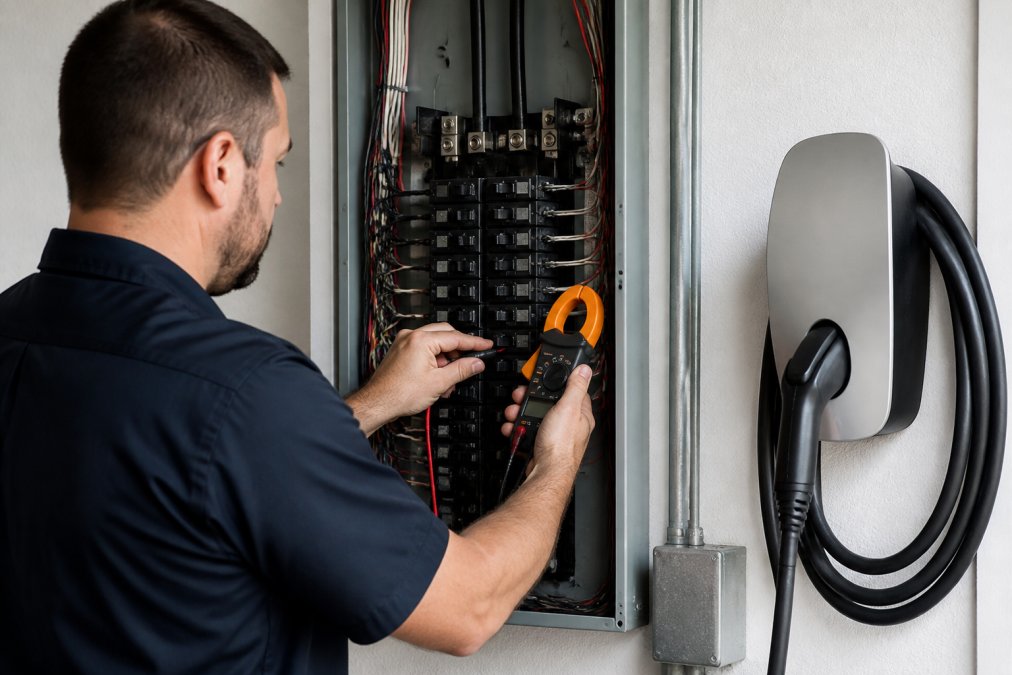
- Next Steps: Getting Professional Verification
- Frequently Asked Questions
Last Updated: September 27, 2026
Understanding Your Electrical Panel and Main Breaker
Your electrical panel receives electricity from the utility company and distributes it through individual circuits. The main breaker at the top controls the total amperage entering your home.
The main breaker rating (typically 100, 150, or 200 amps) tells you how much electrical current your system can handle. Before installing a Level 2 EV charger, you must know how to check electrical panel capacity for ev charger installation to determine if your panel can support the additional demand.
To find your main breaker rating, open your electrical panel door and look at the large breaker at the top, the amperage is printed on it. If you cannot find it, check your electrical documentation or call a professional.
How to Perform an Electrical Load Calculation for EV Charger Installation
A load calculation determines your home's current electrical demand and remaining capacity, the critical step for checking electrical panel capacity for ev charger installation.
List every major appliance (water heater, air conditioning, electric range, dryer, heating system). Find the wattage on your electric bill or appliance documentation, then divide by 240 volts to get amps.
Example: A water heater (4,500 watts ÷ 240 volts = 18.75 amps), central air (30 amps), electric range (40 amps).
Add all demands to get your total continuous load. The National Electrical Code (NEC) requires total load never exceed 80% of panel capacity to prevent overheating and fires.
Calculate available capacity: multiply main breaker amperage by 0.8, then subtract your current load. The result is your available amperage for an EV charger.
Example calculation:
- Main breaker: 200 amps
- 80% capacity: 160 amps
- Current home load: 120 amps
- Available capacity: 40 amps
A Level 2 EV charger typically requires 30-40 amps of dedicated circuit capacity. In this example, you have exactly enough space.
If you're uncomfortable with this calculation, a professional can verify your electrical panel capacity for ev charger installation safely.
Signs Your Electrical Panel Is Overloaded
An overloaded electrical panel creates serious safety risks. Learn to recognize the warning signs before problems escalate.
Frequent circuit breaker trips indicate your panel is working too hard. Multiple trips mean your electrical infrastructure is stressed.
Dimming lights when major appliances start (e.g., air conditioner) signal insufficient available capacity.
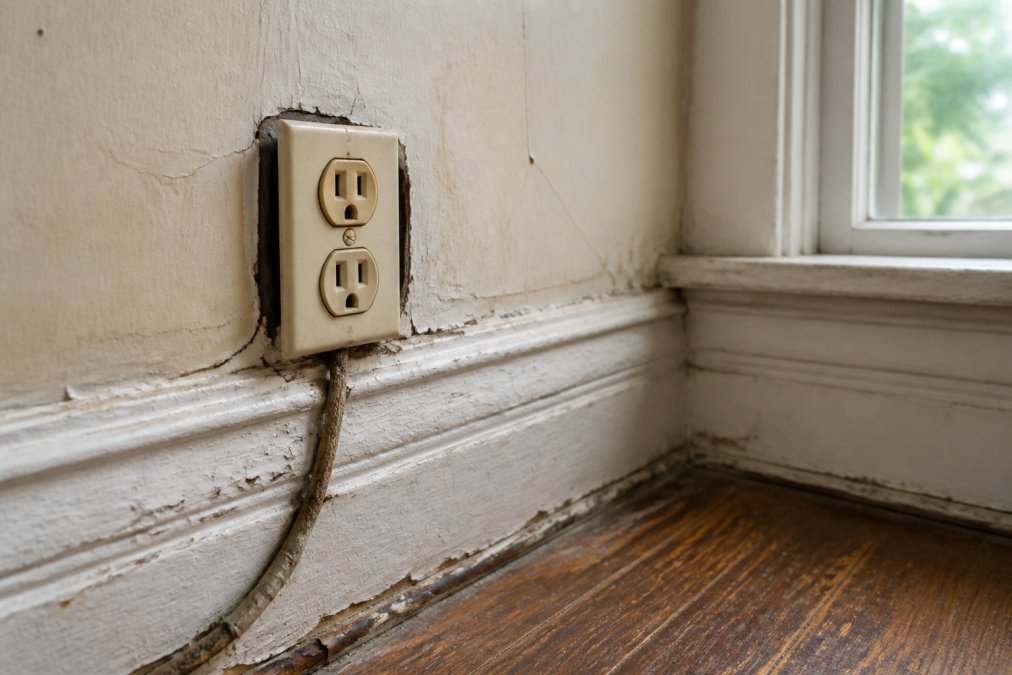
Burning smells near the panel indicate overheating components, a fire hazard. Shut off the main breaker and call a professional immediately.
Checking Available Circuit Spaces and Amperage Rating
Your electrical panel has physical space for breakers and electrical capacity (measured in amps). Both matter for EV charger installation.
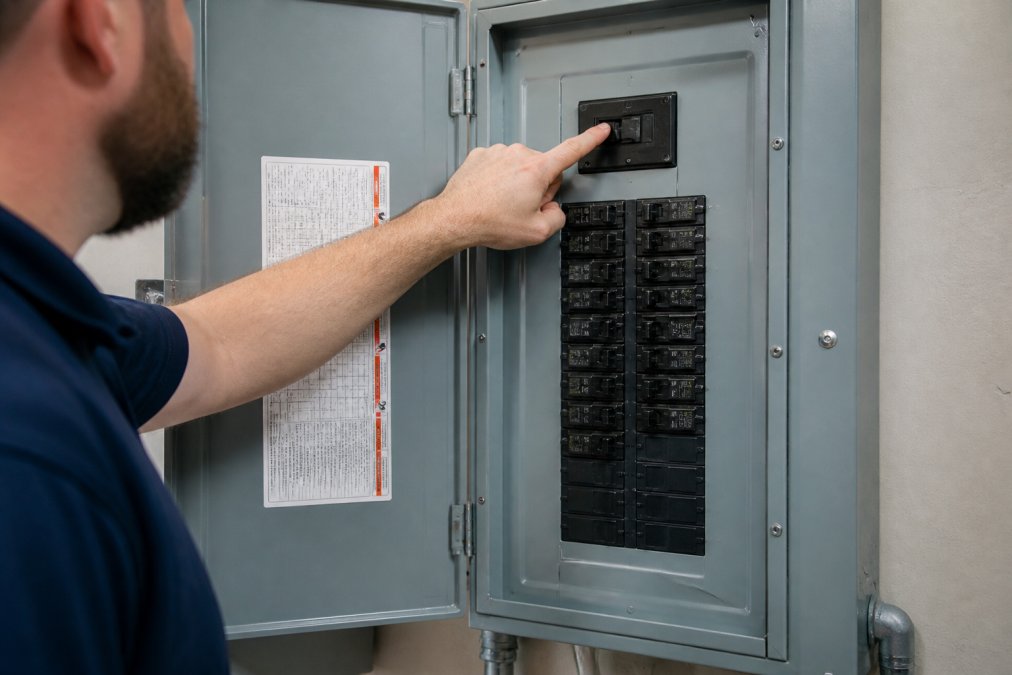
Identifying Panel Components
Main Service Panel (What You Need to Check)
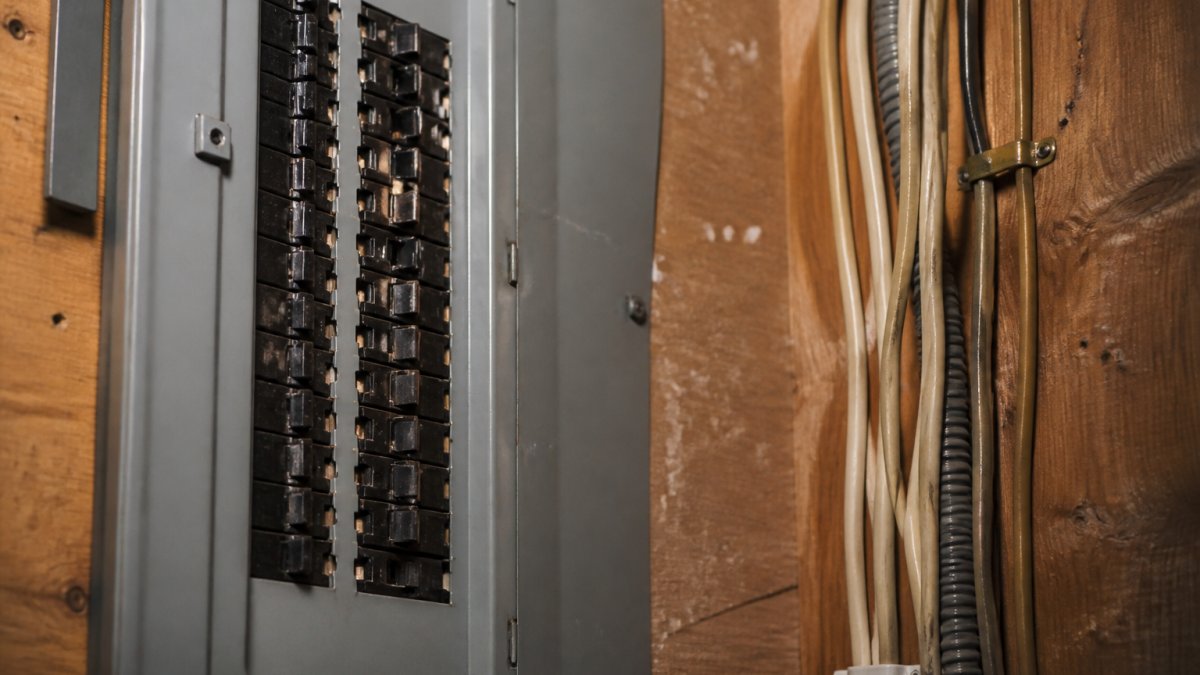
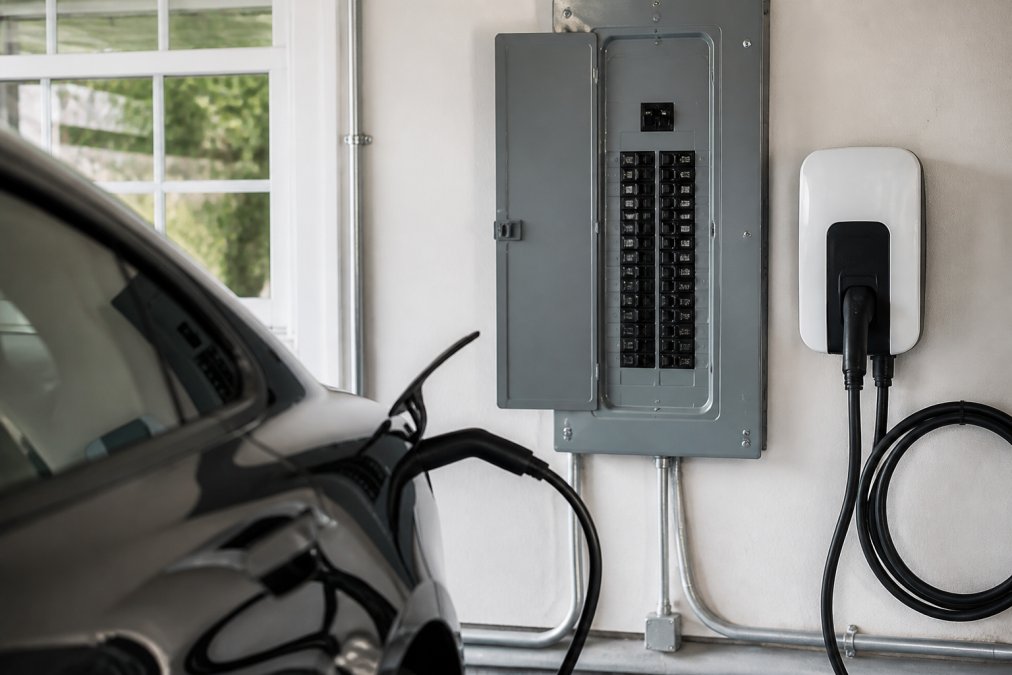
The main service panel is the large metal box where electricity enters your home (typically 24-36 inches tall, 16-20 inches wide). It contains a large main breaker at the top (labeled 100, 150, 200+ amps), rows of smaller breakers controlling individual circuits, and a directory listing which breaker controls which area. It's usually in a basement, garage, utility closet, or exterior wall near the utility meter.
Sub-Panels (Not What You Need)
Service Disconnect (Related but Different)
Counting Available Slots
Open the panel door and count breaker positions. Modern panels have 20-40 slots; you need one empty slot for your EV charger. However, empty slots do not guarantee available capacity, the amperage rating limits your ability to add circuits.
Reading Amperage Ratings
Each breaker has an amperage rating (15, 20, 30, 40, 50 amps). A Level 2 EV charger typically needs a 40-amp breaker. Your main breaker's amperage tells you total capacity; subtract your current load to find available amperage.
Tandem Breakers: A Space-Saving Option
Tandem breakers occupy one slot but control two circuits, allowing capacity addition without removing existing breakers. However, not all panels accept them. Check your panel's documentation or consult a professional before installing, incompatible tandem breakers can damage your panel or violate local codes.
The Bottom Line
Both available slots and available amperage determine whether your panel can accommodate an EV charger. One empty slot with insufficient amperage means you cannot add the charger.
Load Management Devices for EV Chargers: A Modern Alternative
Load management devices monitor your home's power usage and adjust EV charger charging speed automatically, solving capacity limitations without panel upgrades.
When You Need a Panel Upgrade vs. Load Management
Deciding between a panel upgrade and load management requires honest assessment of your situation, your budget, and your future electrical needs.
Panel Upgrade: When and Why
Choose a panel upgrade if available capacity is severely limited. If you have only 10 amps available but your charger needs 40 amps, upgrading provides permanent solution and future flexibility.
Load Management Devices: When and Why
Load management devices (EV Energy Management Systems, or EVEMS) work by monitoring your home's real-time power usage and adjusting the EV charger's charging speed automatically. When your air conditioner and water heater run simultaneously, the device reduces EV charging speed. When demand drops, charging speeds up. This prevents the total load from exceeding your panel's capacity.
Benefits of load management:
- Avoids expensive panel upgrades.
- Faster installation (no utility coordination).
- No permits or inspections required in most areas.
- Protects your electrical infrastructure by preventing overload stress.
- Allows you to install a Level 2 charger on a panel with modest capacity shortfalls (e.g., 30 amps available when 40 amps are needed).
Drawbacks of load management:
- Your EV charges more slowly during peak home usage times (e.g., evening hours when air conditioning and cooking overlap).
- Some homeowners find variable charging speed inconvenient.
- The technology requires proper installation and configuration; poor setup can cause reliability issues.
- Some jurisdictions discourage or restrict load management for safety or code reasons.
- If you later add other high-demand equipment, the system may not have enough flexibility to manage everything.
When load management makes sense:
- Your available capacity is 20-40 amps after current load.
- Your charger needs 40-50 amps, but you have 30-40 amps available (a modest shortfall).
- You charge primarily at night or during off-peak hours when home demand is lower.
- You do not plan to add other major electrical equipment soon.
- You want to avoid the cost and disruption of a panel upgrade.
- Your home's electrical infrastructure is modern and reliable (no signs of overload).
Decision Matrix
| Factor | Panel Upgrade | Load Management |
|---|---|---|
| Cost | $3,000-$8,000+ | $800-$2,500 |
| Timeline | 2-4 weeks (plus utility delays) | 1-2 weeks |
| Permits/Inspections | Yes (required) | Usually no |
| Charging Speed | Always full speed | Variable (slower during peak demand) |
| Future Flexibility | High (supports additional equipment) | Limited (depends on system capacity) |
| Best for | Long-term, multiple devices | Short-term, single charger, modest shortfall |
Local Codes and Professional Input
Local electrical codes influence this decision. Some jurisdictions discourage load management for safety reasons or require specific types of systems. Others embrace it as a practical solution. Your electrician knows local standards and can advise whether load management is permitted in your area.
- Verify your available capacity accurately.
- Identify any existing panel issues that might complicate either option.
- Explain which option complies with local codes.
- Provide accurate pricing for your specific situation.
- Recommend the most cost-effective path forward.
Next Steps: Getting Professional Verification
After you've completed your own assessment, professional verification prevents costly mistakes.
Frequently Asked Questions
How many amps do I need for a Level 2 EV charger?
Most Level 2 EV chargers require 40-50 amps of dedicated circuit capacity. A typical home charger draws 30-40 amps during operation. Your electrical panel must have enough available amperage and an open breaker slot to accommodate this dedicated circuit. The exact requirement depends on your charger model and your vehicle's charging speed specifications. A professional load calculation ensures you have sufficient capacity without overloading your service.
What happens if I install an EV charger on an overloaded electrical panel?
Installing a charger on an overloaded panel creates serious safety risks: breakers may trip frequently, cutting power to your home; wiring can overheat, increasing fire hazard; and you violate the National Electrical Code (NEC), which requires proper overcurrent protection. An overloaded panel cannot safely handle the continuous load demand of an EV charger. This is why a load calculation is essential before installation to confirm your panel has the capacity to safely support the additional electrical demand.
Can I use load management devices instead of upgrading my electrical panel?
Yes. Load management devices (EVEMS) can help by automatically adjusting your charger's power draw based on available capacity in your home. These systems monitor your panel's load and reduce EV charging speed when other appliances demand power, preventing overload. This is often more affordable than a full panel upgrade and works well if your panel has adequate total amperage but limited available breaker space. However, if your main breaker is undersized or your service entrance is too small, a panel upgrade may be necessary.
Do I need a 200 amp panel for an EV charger?
Not necessarily. A 100 amp panel can support an EV charger if you have sufficient available amperage after accounting for existing loads. The National Electrical Code requires that your EV charger circuit plus all other continuous loads not exceed 80% of your panel's rating. A 200 amp panel provides more flexibility and available capacity, especially in larger homes with multiple high-demand appliances. A load calculation will determine whether your current panel size is adequate or if an upgrade is needed.