 ultimate-guide
How to Find Reliable Electricians: 2026 Guide
Table of Contents
- Why Finding a Reliable Electrician Starts With Verification
- Licensed and Insured Electrician Requirements You Should Confirm
- Questions to Ask an Electrician Before Hiring
- Understanding the Average Cost of Electrical Repairs
- Red Flags and Scam Detection When Vetting Electricians
- Emergency vs. Non-Emergency Hiring: Know the Difference
- Permit and Code Compliance: Protecting Your Property
- Conclusion: Your Next Step Toward Reliable Electricians
- Frequently Asked Questions
Last Updated: September 6, 2026
Why Finding a Reliable Electrician Starts With Verification
Faulty wiring causes thousands of residential fires each year, and a bad hire can cost far more than the repair (nfpa.org). Finding reliable electricians begins with verifying credentials before anyone touches your service panel.
At EmergenServe, we have spent years serving the Charleston Lowcountry. Below, we show you how to verify licenses, ask the right questions, and spot warning signs that separate qualified contractors from unlicensed operators.
But first, here is what most guides get wrong: they focus on price comparison before establishing whether the contractor is even legally allowed to work on your property.
Licensed and Insured Electrician Requirements You Should Confirm
The single most important step is confirming your candidate holds a valid electrical license for your state. Licensed and insured electrician requirements exist to protect you from substandard work and liability. Most states require electricians to pass a rigorous exam and complete thousands of hours of supervised work before earning a license (ncsl.org).
How to Verify a License in Practice
Do not just take the contractor's word or a photocopy of a license. The verification process takes less than ten minutes:
- Ask for the license number. Every legitimate contractor will have this readily available. Write it down on your initial call.
- Go to your state's licensing board website. In most states, this is a division of the Department of Labor, Licensing, and Regulation or a similar body.
- Use the board's online lookup tool. Enter the license number to confirm the license is active and not expired, suspended, or revoked. This public database will also show any disciplinary actions, fines, or complaints that have been formally filed against the contractor.
- Check the license classification. A license is not a blanket permit to do all work. Many states have separate classifications for residential, commercial, and industrial electricians. Ask if their license classification covers your specific project type.
The Insurance Verification Process
Insurance is equally non-negotiable. A professional contractor should carry both general liability insurance and workers' compensation. General liability covers damage to your property, while workers' compensation protects you from being sued if a worker is injured on your job site (iii.org). Verifying this is more involved than just seeing a certificate:
- Request a certificate of insurance (COI). This is a standard document that any insured business can produce from their agent. It lists the policy types, coverage limits, policy numbers, and the effective dates.
- Call the insurance agency directly. Do not call the number on the COI, as it could be a fake document. Instead, look up the agency's phone number independently and ask them to confirm that the policy is active and that the coverage limits are what the certificate states. This step takes five minutes and eliminates a significant portion of unqualified candidates.
- Confirm you are named as an additional insured. For larger projects, you can request that your name be added to the contractor's policy as an additional insured. This provides you with direct rights under their policy and ensures you are notified if the policy lapses. This is a common practice for commercial work but is less common for residential jobs; asking for it is a strong signal that you are a serious, informed consumer.
Many property owners assume a contractor who "looks professional" must be properly insured. In practice, this assumption has led to countless homeowners being held liable for injuries sustained by uninsured workers.
Understanding Bonding
Beyond licensing and insurance, ask if the contractor is bonded. A bond protects you if the contractor fails to complete the job or pay for permits, allowing you to make a claim against it to recover financial losses.
Questions to Ask an Electrician Before Hiring
Asking the right questions before hiring separates thorough property owners from those who learn costly lessons the hard way. A legitimate contractor will welcome your questions and provide clear, direct answers. Hesitation, vagueness, or defensiveness should raise immediate concerns.
Prepare a list of questions before you make the call. Write them down and take notes during the conversation to compare candidates fairly.
Questions About Experience and Scope of Work
Start by asking how long the company has been in business and whether they employ master electricians or journeymen. Ask whether the technician who will perform your job is a direct employee or a subcontractor.
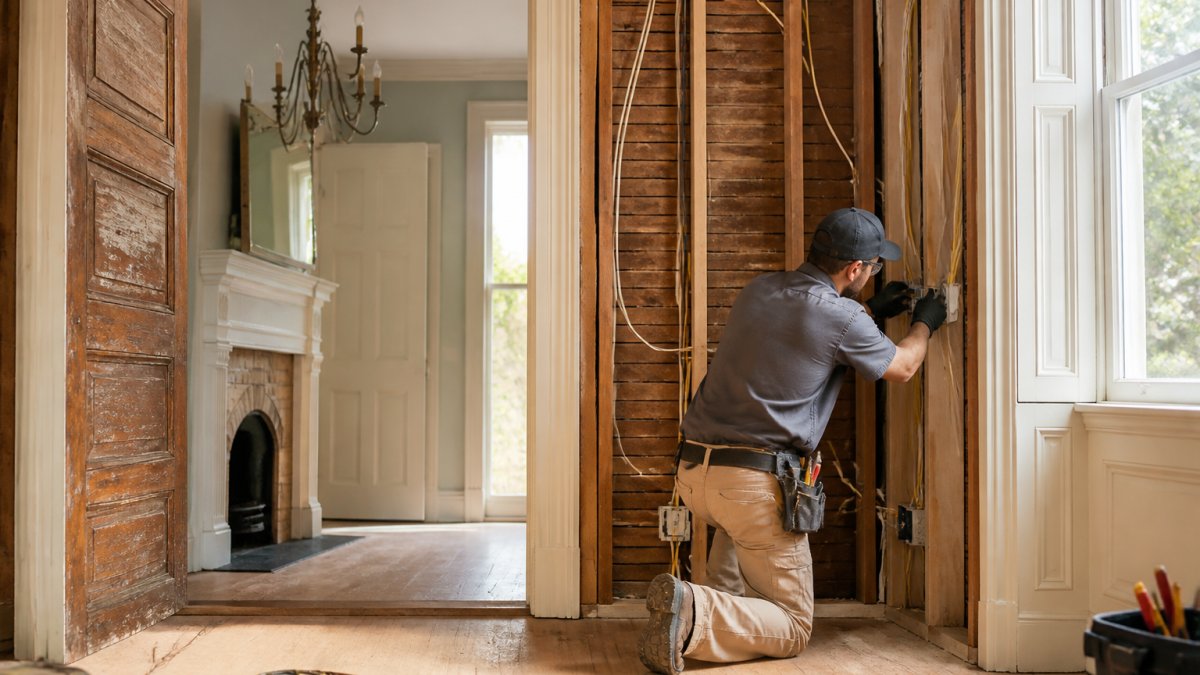
Inquire about specific experience with your type of project. Residential wiring, panel upgrades, and historic property renovations each demand different expertise. If you own an older home, ask whether the company has experience with outdated wiring systems like knob-and-tube or aluminum wiring.
Request references from past clients who had similar work completed. A reputable contractor will gladly provide contact information for recent customers.
The Most Important Questions Competitors Miss
To truly differentiate between candidates, ask questions that reveal how a contractor thinks and whether they will protect you legally and financially:
- "Will you pull a permit for this job, and who is responsible for scheduling the inspection?" This is a critical question. A reliable contractor will not only say yes but will explain that they handle the permit application and the inspection scheduling as part of their standard process. If a contractor hesitates or suggests a permit is unnecessary for a job that clearly requires one (like a panel upgrade or new circuit), consider that a disqualifying red flag. Unpermitted work can void your homeowner's insurance and create major problems during a home sale.
- "Can you walk me through your troubleshooting process for a problem like mine?" This question is a powerful screening tool. A vague answer like "We'll figure it out" suggests a trial-and-error approach. A top-tier electrician will describe a systematic process: they will start by checking the panel, then trace the circuit, use a multimeter to test for voltage drops, and isolate the problem before recommending a fix. This question reveals their diagnostic competence.
- "What is your policy on change orders?" Electrical work is unpredictable, and the scope can change once walls are opened. A professional contractor will have a clear, written policy for how they handle unexpected issues. They should explain that they will stop work, call you, explain the new situation, provide a revised quote, and get your written approval before proceeding. Be wary of contractors who say they will "just handle it" or who have no formal process.
- "Who exactly will be working in my home?" This is about more than just subcontractors. Ask if the workers are background-checked and drug-tested. Many reputable companies conduct these checks as a matter of policy. This question also helps you understand if the person who gave you the estimate is the same person who will be doing the work, a common source of disconnect.
Questions About Pricing and Warranties
Always request a written estimate before work begins. It should detail the scope of work, materials, and total cost. Be wary of contractors who refuse to provide written documentation or demand payment upfront.
Ask whether the company charges a service call fee and whether it is credited toward the repair. Clarify whether pricing is hourly or flat-rate for specific jobs. For emergency calls, ask about after-hours rates before you commit.
Inquire about the warranty on workmanship. A professional contractor should stand behind their labor, typically offering a warranty of at least one year. Ask what it covers and how to file a claim if issues arise. A strong warranty is a sign of confidence; a weak or non-existent one is a sign you should look elsewhere.
Understanding the Average Cost of Electrical Repairs
Pricing for electrical work varies widely based on project scope, local labor rates, and the complexity of your home's wiring. Rather than focusing on a single national average, request itemized quotes from multiple licensed contractors and compare them side by side.
The age of your home, accessibility of wiring, and whether permits are required all affect the price. A panel upgrade in a modern home with ample access will cost less than the same upgrade in a historic property with plaster walls and limited attic space.
Be cautious of quotes that come in significantly lower than others. An unusually low bid often signals that the contractor plans to cut corners, skip permits, or use substandard materials.
For accurate pricing, request a detailed written estimate that itemizes labor, materials, and permit fees. Ask the contractor to explain any line items you do not understand.
Red Flags and Scam Detection When Vetting Electricians
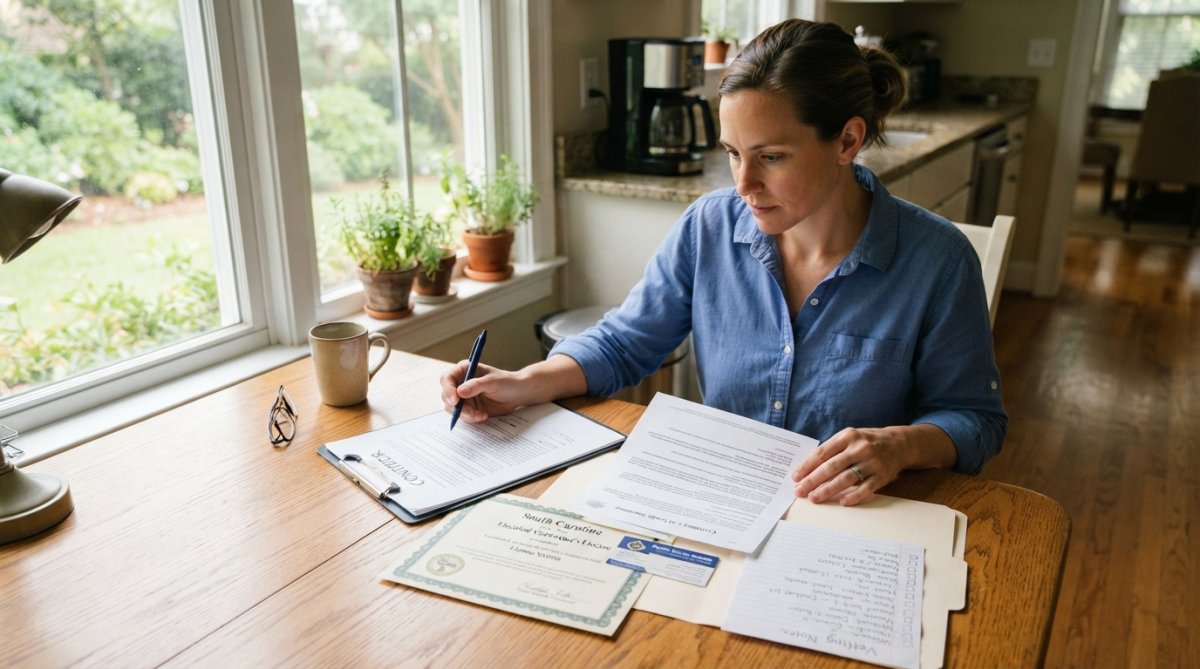
Certain warning signs should immediately disqualify a candidate. A contractor who pressures you to decide on the spot, demands full payment upfront, or insists on cash-only transactions is likely running a scam.
Door-to-door electricians offering "special deals" or claiming they noticed a problem with your home while passing by are a classic scam pattern. They often perform unnecessary work, use scare tactics, and disappear before any warranty claims arise.
Another red flag is a contractor who cannot provide proof of licensing or insurance when asked. Legitimate professionals carry these documents and will gladly show them.
Professional accreditation matters. Look for contractors who maintain memberships in industry associations and have positive reviews on platforms like the Better Business Bureau. A pattern of complaints about unfinished work or poor communication is a clear signal to move on.
Emergency vs. Non-Emergency Hiring: Know the Difference
Not every electrical issue requires an immediate response, and understanding the difference can save you money and stress. A true emergency includes sparking outlets, burning smells from walls, power outages affecting your entire home, or exposed wires.
Non-emergency issues, such as flickering lights, dead outlets, or installing new fixtures, allow time for proper vetting. For these projects, research multiple contractors, request quotes, and verify credentials without the pressure of an active hazard.
When an emergency does occur, you still need a licensed professional. Ask the responding contractor for their license number and insurance information before they begin work.
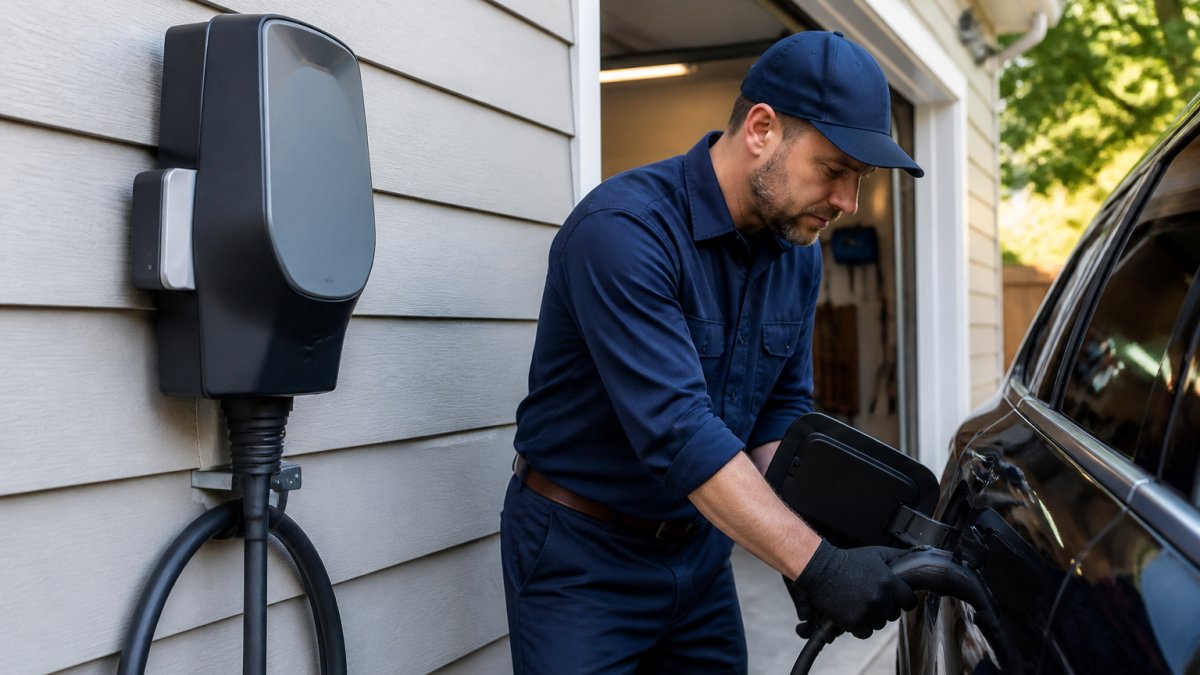
For planned projects like EV charger installation or panel upgrades, you have time to compare contractors, check references, and ensure the company has specific experience with your type of installation.
Permit and Code Compliance: Protecting Your Property
Electrical work is governed by the National Electrical Code, which establishes minimum safety standards for wiring and installations. Most jurisdictions require permits for significant electrical projects.
Skipping permits is a serious mistake. Unpermitted work can fail inspection, create safety hazards, and cause problems when you sell your home. Insurance companies may deny claims related to unpermitted work.
A reliable electrician will pull the necessary permits, schedule the required electrical inspection, and ensure the work passes code compliance before finishing the job. Ask your contractor directly whether permits are required for your project and who will be responsible for obtaining them.
Your local building department is a valuable resource. You can verify a contractor's license status, check whether permits were pulled for your address, and confirm that inspections were completed and passed.
Conclusion: Your Next Step Toward Reliable Electricians
Finding reliable electricians requires diligence, but the process is manageable when you know what to look for. Verify licensing and insurance, ask pointed questions, request written estimates, and trust your instincts when something feels off.
When you need a licensed, bonded, and insured electrical contractor in the Charleston Lowcountry, EmergenServe delivers the verification and quality craftsmanship you deserve. Our team provides same-day service, 24/7 emergency response with a 60-minute arrival window, and expert installation of EV chargers, panel upgrades, and code-compliant wiring. We are a locally owned family business with a 5.0 star rating and accreditation from the Better Business Bureau.
Get started with EmergenServe and schedule your service today for peace of mind backed by licensed professionals who do the job right the first time.
Frequently Asked Questions
What questions should I ask an electrician before hiring them?
Ask for proof of licensing and insurance, their experience with your specific type of work, whether they pull permits, and if they offer a workmanship warranty. Request a written estimate that details the scope of work and ask who will perform the job, since some companies send subcontractors. Also ask about their experience with older homes or panel upgrades if your project involves those areas. These questions help you verify you are hiring a qualified professional who will complete the job safely and to code.
What are the licensed and insured electrician requirements I should verify?
A licensed electrician must hold a valid state license. Insurance requirements usually include general liability and workers' compensation. You can verify a license through your state's licensing board website. Ask for a certificate of insurance and confirm the policy is current. A master electrician has additional experience and can pull permits, while a journeyman works under their supervision. Always confirm these credentials before work begins.
What is the average cost of electrical repairs?
Electrical repair costs vary based on the job's complexity, local rates, and whether it is an emergency call. Most electricians charge either an hourly rate or flat-rate pricing for common repairs. Service call fees may apply. For an accurate figure, request written estimates from multiple contractors. Emergency services typically cost more than scheduled repairs. Always ask for a detailed written estimate before approving work so there are no surprises on your final bill.
How can I tell if an electrician is good?
A good electrician has a valid license, carries insurance, and provides references from past clients. Check online reviews and look for patterns in feedback about punctuality, communication, and quality of work. They should ask questions about your electrical issue, explain their findings clearly, and provide a written estimate. They should also discuss permit requirements and code compliance for your project. A professional who educates you about the work and offers preventative maintenance advice shows genuine expertise and care for your safety.