 how-to
Emergency Electrician Charleston: 24 Hour Service Guide
Table of Contents
- What Qualifies as an Electrical Emergency
- DIY Safety Triage: What to Do Before Help Arrives
- How to Find Reliable Electricians for 24 Hour Service
- Cost of Emergency Electrical Repairs
- Local Code Compliance and Historic Home Considerations
- Emergency Electrician Charleston 24 Hour Service: When to Call
- Frequently Asked Questions
Last Updated: September 14, 2026
What Qualifies as an Electrical Emergency
An electrical emergency is any fault posing an immediate risk of fire, shock, or injury, or that leaves a property without power in a way that threatens safety or health. At EmergenServe, we field these calls across the Lowcountry every week, and the difference between a nuisance and a true emergency comes down to three factors: heat, smoke, or a burning smell; risk of shock; and whether the power loss affects critical systems. That scale determines how fast you act while you wait for an emergency electrician Charleston 24 hour service.
Immediate Danger Signs
Call for emergency help right away if you notice any of the following:
- Smoke or a burning smell coming from an outlet, switch, or panel
- Scorch marks, melted plastic, or discoloration around an outlet
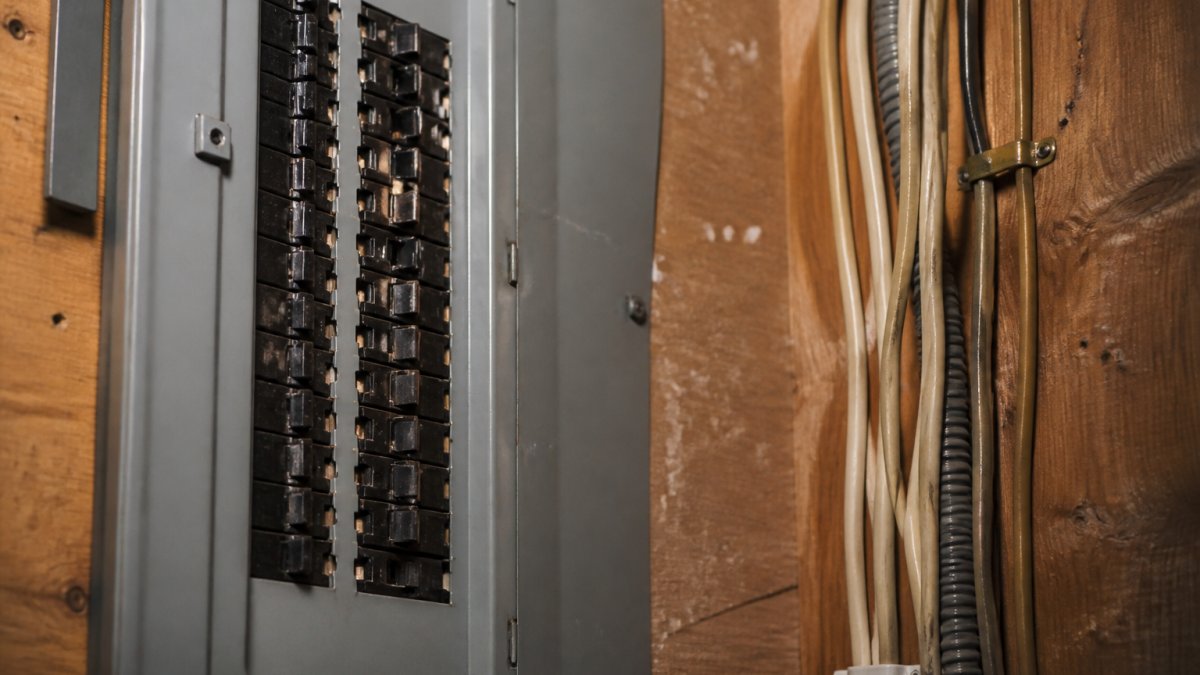
- A buzzing, crackling, or sizzling sound from the electrical panel
- Sparking from an outlet, cord, or breaker
- Warm or hot outlets and switch plates
- Water contacting live electrical equipment
- A shock felt when touching an appliance or fixture
These signs point to an electrical fire hazard or an active short circuit. Cut power at the breaker only if you can reach the panel safely and it is not wet, sparking, or hot. Otherwise, evacuate and call 911.
Urgent but Not Life-Threatening Issues
Some problems need same-day attention without a 911 call. A circuit breaker that keeps tripping, flickering lights across multiple rooms, dead outlets on one circuit, or voltage fluctuations that dim lights when appliances start all point to a wiring or load problem that will worsen. The U.S. Consumer Product Safety Commission guidance on home electrical safety notes that faulty wiring and related electrical failures remain a leading cause of residential fires, which is why these "minor" symptoms deserve a professional look before they escalate.
DIY Safety Triage: What to Do Before Help Arrives
Here is what to do, in order, before a technician reaches your door.
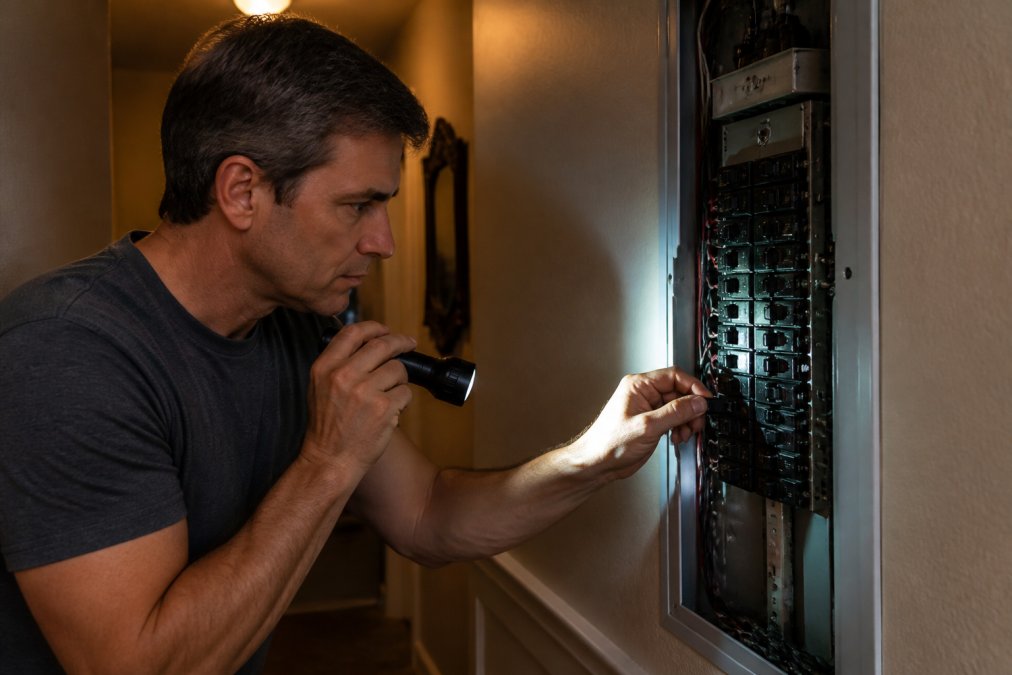
- Do not touch the source. If you see sparks, smoke, or smell burning, keep your distance and call 911.
- Shut off power at the panel if it is safe. Never stand in water or touch a wet panel.
- Unplug affected devices only if the outlet is cool and undamaged.
- Clear the area and keep children and pets away from the affected circuit.
- Do not reset a breaker more than once. Repeated resets on a tripped breaker can start a fire inside the panel.
- Document what you saw. Note which breakers tripped, which outlets failed, and any smells or sounds. This speeds up electrical troubleshooting on arrival.
The most common mistake we see is homeowners resetting a breaker three or four times before calling. Each reset pushes current through a fault that is already overheating. One reset, then stop.
How to Find Reliable Electricians for 24 Hour Service
Finding a reliable electrician for after-hours work comes down to verification. Anyone can answer a phone at 2 a.m.; not everyone is licensed, insured, and equipped to handle a live fault.
Verify Licensing and Insurance
Ask for the license number and confirm it against your state's licensing board before work begins. A licensed electrician carries liability insurance and bonding, which protects you if something goes wrong. If a company cannot produce proof on request, that is your answer. EmergenServe is licensed, bonded, and insured, and provides documentation without being asked.
Check Response Time and Availability
Response time separates a real 24/7 operation from a call center that dispatches in the morning. Ask two questions: what is your average response time, and who is actually coming? A company that guarantees a specific window, like our 60-minute emergency response, is staffing for it. One that says "as soon as possible" is not.
| What to Check | Why It Matters | What to Ask |
|---|---|---|
| License and insurance | Protects you from liability | "Can you send proof now?" |
| Response time | Limits damage and downtime | "What's your average arrival window?" |
| After-hours staffing | Confirms real 24/7 coverage | "Who is on call tonight?" |
| Upfront pricing | Avoids surprise billing | "Is the diagnostic fee quoted upfront?" |
| Local code knowledge | Ensures compliant repairs | "Are you current on local code?" |
Cost of Emergency Electrical Repairs
EmergenServe has not provided any pricing data. Pricing depends on quantity, dates, and delivery. Please refer to EmergenServe's website for current prices or a quote.
The Four Line Items Behind Every Emergency Invoice
1. Dispatch or trip fee. A flat charge for rolling a truck to your address, whether or not a repair is performed. It covers fuel, drive time, and the labor of getting a licensed electrician to your door.
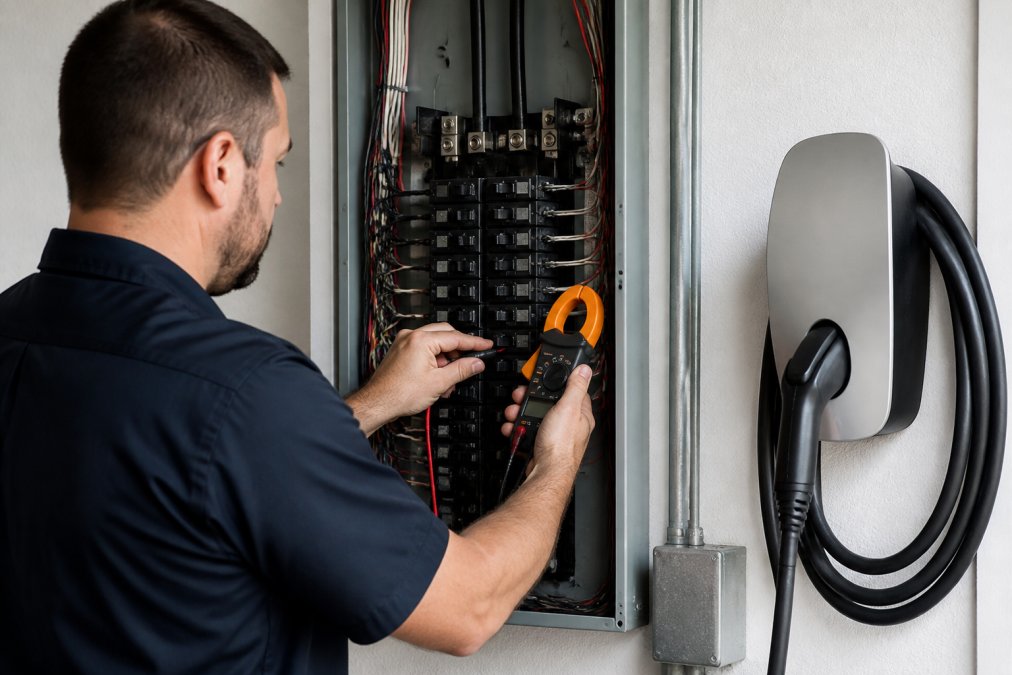
2. Diagnostic fee. This covers tracing the fault: opening the panel, testing circuits, isolating the failed leg, and identifying the root cause.
3. After-hours surcharge. Emergency work between roughly 6 p.m. and 7 a.m., on weekends, and on holidays typically carries a labor multiplier. This reflects the cost of staffing a licensed electrician overnight.
4. Parts and materials. Breakers, receptacles, GFCI devices, wire, and panel components are billed at a markup over supply-house cost.
Why No One Quotes a Flat Number Over the Phone
A breaker that trips because of a failed receptacle is a different job from one that trips because of a compromised panel bus, yet both present identically on the phone. Any contractor who quotes a firm total before seeing the fault is guessing high to protect themselves or low to win the call and renegotiating on site. The honest version is a quoted dispatch and diagnostic fee up front, a written estimate after diagnosis, and your approval before repair work begins.
Three Questions to Ask Before You Authorize Dispatch
- Is there an after-hours surcharge, and what is the multiplier? Get the number, not a range.
- Is the diagnostic fee credited toward the repair if I approve the work? This single question can change your total by the cost of the diagnostic.
- Will I receive a written estimate before any repair begins? Verbal estimates are not enforceable. Written ones are.
A legitimate emergency electrical quote has two stages: a fixed dispatch and diagnostic fee quoted before the truck rolls, and a written repair estimate you approve after diagnosis. If a contractor collapses those into one number sight-unseen, you are being sold, not quoted.
What Drives the Total Up or Down
The variables that move the final number most are access (a panel behind finished drywall costs more to reach than one in an open garage), age of the wiring (modern Romex is faster to work with than cloth-insulated or knob-and-tube conductors), and whether the fault is isolated to one device or traces back to the service panel. A single failed GFCI is a short visit; a failed main breaker or burned neutral bar is a longer one.
Ask for the estimate in writing, what is included, and what would change the price. A contractor who answers all three clearly is one you can trust with an after-hours call.
Local Code Compliance and Historic Home Considerations
Older homes in the historic districts bring a specific set of problems that a suburban tract house never will. Knob-and-tube wiring, two-prong outlets with no equipment ground, and undersized service panels were built for a fraction of the load a modern household draws. The National Fire Protection Association overview of NFPA 70, the National Electrical Code sets the baseline for safe installation, and local amendments in older districts add requirements around preserving exterior features while upgrading what is behind the walls.
What the Code Actually Requires When You Upgrade
Three provisions of the National Electrical Code drive most of the work in older homes:
- Grounding and bonding (Article 250). Modern circuits require an equipment grounding conductor; a knob-and-tube house has no ground path at all. Three options: run a new grounded circuit, install a GFCI receptacle for shock protection without a ground, or retrofit a ground. Each has a different cost and level of protection.
- Arc-fault circuit interrupter protection (Article 210.12). AFCI breakers are required for most dwelling-unit branch circuits in new work. In an older panel, adding AFCI protection often means replacing the panel itself, because the existing bus may not accept the breaker type.
- Ground-fault circuit interrupter protection (Article 210.8). GFCI protection is required in kitchens, bathrooms, garages, outdoors, and other wet or damp locations. A 1920s bathroom with a single ungrounded receptacle fails this on both counts.
The Humidity Factor
Coastal humidity is a failure mechanism, not a cosmetic issue. Three patterns show up repeatedly in older Lowcountry homes:
Corroded panel buses and breaker terminals. Warm, humid air condenses on cool metal inside a panel, especially one in a garage or on an exterior wall. Over years, that moisture oxidizes aluminum and copper terminations, raising resistance and heat. A panel that looks fine from the cover can have visibly corroded terminals once the dead front is removed.
Degraded cloth and rubber insulation. Pre-1950s conductors were often cloth braid over rubber. Heat and humidity make rubber brittle, and the cloth braid wicks moisture to the conductor, the wiring most likely to fail inside a wall where you cannot see it.
Aluminum branch-circuit wiring. Some homes built in the late 1960s and early 1970s used aluminum conductors for 15- and 20-amp branch circuits. Aluminum expands and contracts more than copper under load, loosening connections over time. The remedy is a listed connector for aluminum-to-copper termination, not a simple re-tightening.
A Phased Approach That Preserves the House
You do not have to rip everything out. A phased plan brings an older property up to code without gutting its character:
- Service panel first. Replace the panel and bring the service entrance up to current ampacity. This is the foundation every later upgrade depends on.
- Ground the wet rooms. Add grounded, GFCI-protected circuits to bathrooms, kitchen counters, laundry, and exterior outlets. These are the highest-shock-risk locations.
- Run grounded circuits room by room. As rooms are renovated or opened for other work, replace knob-and-tube runs with modern grounded cable.
- Add AFCI protection as panels and circuits are upgraded, prioritizing bedrooms and living areas.
Ask any contractor how they handle historic properties before you book. The right answer involves a phased plan, a code-aware scope, and a willingness to work around original plaster and trim, not a blanket rewiring quote.
What to Ask a Contractor About Code
- Which edition of the NEC is currently adopted here, and are there local amendments? Adoption lags vary, and a contractor who cannot answer this is working from memory.
- How will you handle original plaster and trim? The answer should involve fishing wire and minimal-access methods, not demolition.
- Will the work be permitted and inspected? Panel replacements and new circuits generally require a permit. A contractor who offers to skip it is transferring the liability to you.
- What is your plan for the ungrounded circuits you are not replacing today? The answer should include GFCI protection as an interim measure.
A code-compliant upgrade in an older home is a sequence, not a single event. The right contractor will tell you what has to happen now, what can wait, and why.
Emergency Electrician Charleston 24 Hour Service: When to Call
Call immediately for smoke, burning smells, sparking, or shock. Call the same day for repeated breaker trips, dead circuits, or flickering across multiple rooms. Wait for business hours only for cosmetic issues or a single non-essential outlet. When in doubt, call.
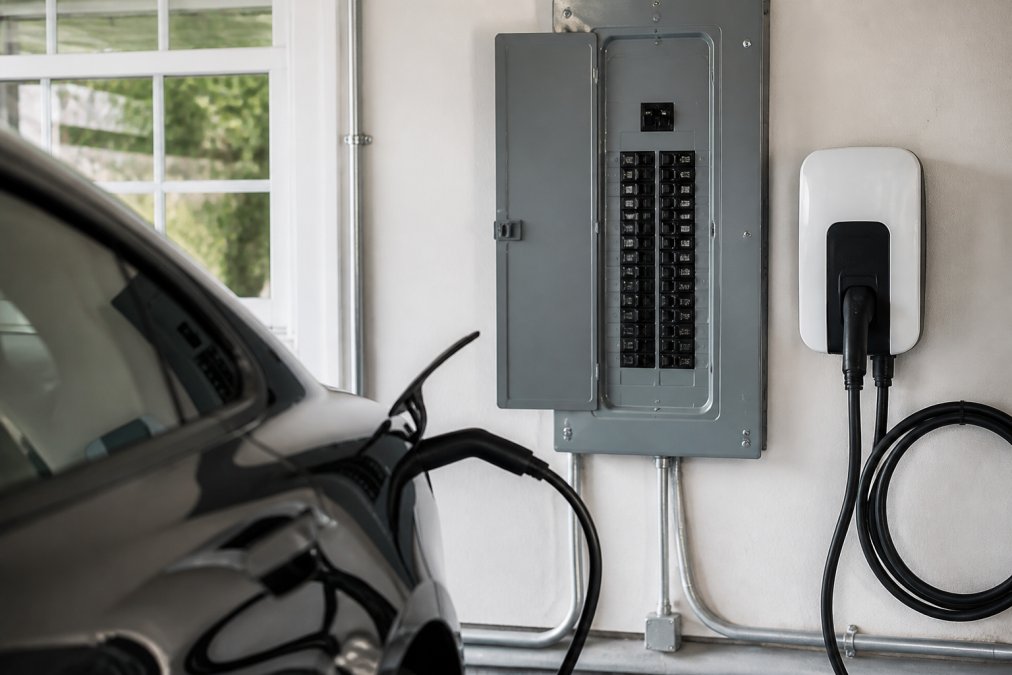
EmergenServe is a locally owned, family-owned electrical contractor serving the Lowcountry with 24/7 emergency repairs, same-day booking, and a 60-minute emergency response. We handle residential electrical services, commercial electrical repair, panel upgrades, wiring upgrades, EV charger installation, and surge protection, and we are Google Screened and BBB accredited with a 5.0 star rating across 28+ reviews.
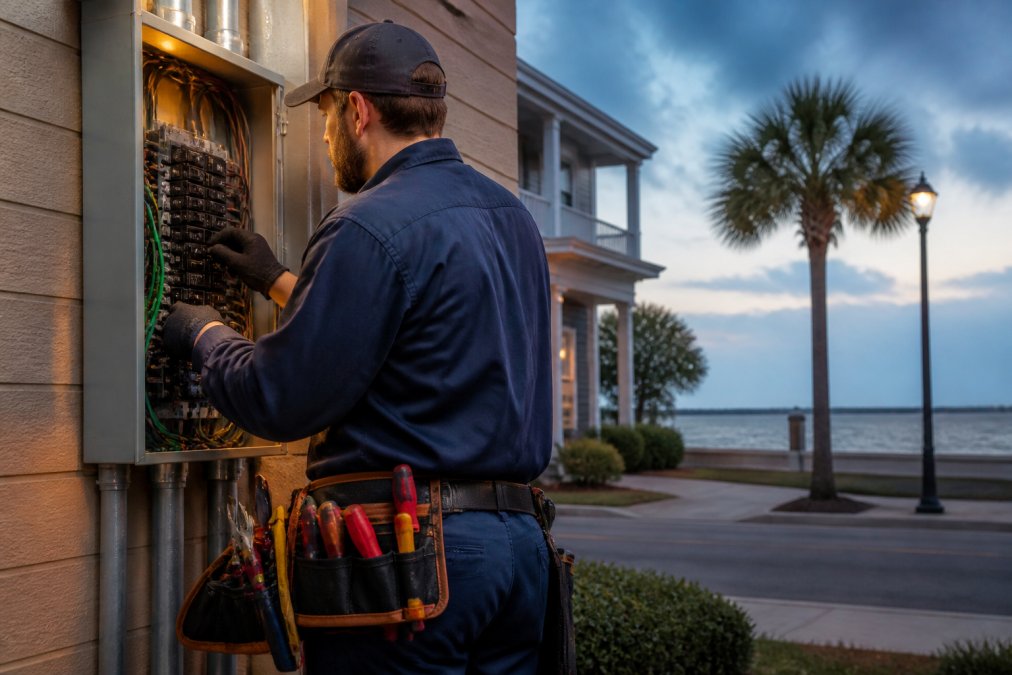
When a breaker trips at midnight or an outlet starts smoking, the last thing you want is to gamble on an unfamiliar contractor. EmergenServe answers around the clock, arrives with licensed, bonded, and insured technicians, and quotes the work before it begins, so there are no surprises on the invoice. Our team handles everything from emergency panel repair and exposed wiring to full wiring upgrades and EV charger installation, with the same-day service and 60-minute response the Lowcountry expects. Get started with EmergenServe and get your power back safely.
Frequently Asked Questions
Can you call an electrician at night?
Yes, many electrical contractors in Charleston offer 24/7 emergency services, including late-night and weekend calls. EmergenServe, for example, provides 24-hour dispatch with a 60-minute response time. When you call, describe the issue clearly, and the dispatcher will guide you on immediate safety steps. Expect after-hours rates to be higher than standard service calls, but a reputable company will explain pricing before work begins.
What qualifies as an electrical emergency?
An electrical emergency includes any situation with immediate risk of fire, shock, or injury. Signs include burning smells, smoke from outlets, sparking, exposed wiring, or a panel that is hot to the touch. A total power outage affecting medical equipment or a business's refrigeration also qualifies. If you see any of these, evacuate if necessary and call an emergency electrician right away. Do not attempt to fix the issue yourself.
How quickly should an emergency electrician respond?
Response times vary, but top providers aim for under 60 minutes in urban areas. EmergenServe guarantees a 60-minute response for emergency calls in the Charleston Lowcountry. When choosing an electrician, ask about their average response time and whether they have technicians stationed locally. Keep in mind that traffic, weather, and demand can affect arrival times, so clear communication is key.
Are emergency electrical services more expensive?
EmergenServe provides transparent, upfront pricing before work starts, so you know what to expect. For non-urgent issues, scheduling during regular hours can reduce costs. Always ask for a written estimate and avoid contractors who won't provide one.